A Prayer of Thanksgiving

Richard Skinner

Thanksgiving Dinner Table

I seem to have developed a habit of posting only on holidays — and not even all of those. Sigh…

More about my writing plans later, but first:

A Prayer of Thanksgiving

Dear Lord, on this day of giving thanks, as this family sits once again at this table, we pray that our reflections on the year meet your approval, and receive your blessing.

Lord, we are thankful for a country and a people that provide such a bountiful harvest, day in and day out. Their toils in your fields have given us this table on this day. (We incidentally thank you for reminding the cook to not put sticks in the stuffing!)

Lord, we are thankful for the men and women that defend our country and our people, day in and day out. We are thankful that two of these defenders are here with our family today. We pray you to sustain those who are not able to join their loved ones on this day, and that you will see fit to return them to their homes safely, or take them to your loving bosom if such is not to be.

Lord, we are thankful for your gracious nurturing hand over this family this past year, as you have ensured that we have received all that we need, if not all that we want. We pray that you continue to do so, until each of us is called to rejoin you.

Amen.

*****

Writing plans… only the best laid ones, of course.

I am kicking myself every day (except today, as I am the cook this year) to get a cover done for Regular Visitors, which is a new Tale By The Road. The story was actually written last year, but I failed to get a cover done in time for this Christmas Tale to be published then. I’ll be getting back to work on that one tomorrow (Friday), although I fear that most of the day will be taken up by playing with the Apophysis fractal generation package, which Cedar Sanderson turned me on to. Fascinating and apparently very powerful package — which will mean a steep learning curve for this fumbling non-artist. December 1st is the goal here.

After that, it is back to work on the long-suffering first novel, working title Talons of Vengeance. I spent the last week or so reviewing what I do have done, and “picking up sticks” on the background, which was rather scattered about. If I can keep up the momentum from the last couple of weeks, that novel should be coming out early next year (I am hoping for January — but if the body and computer crash like they simultaneously did last year… This is why I keep a wood bookshelf right next to my desk, by the way!) There should at least be a snippet next month (the first chapter, actually).

NOTEanyone who wishes to volunteer as a beta reader will be much appreciated!

That’s about it for news from here. Happy Thanksgiving, everyone!

*****

P.S. No, that is not my Thanksgiving table. I’m writing this the night before, but I am going to post it first thing in the morning — right after my own bird gets into the oven. Tonight is the apple pies and other miscellaneous prep work. The image at the top is a photograph by Gabriel Garcia Marengo, which he kindly made available for free on unsplash.com (a new image site that I am slowly exploring).

*****

P.P.S. If you follow me on social media, you undoubtedly know that I am an agnostic. So? I think it is highly unlikely that prayer can hurt anyone — and for all that I know, it may help.

*****

P.P.P.S. Getting ridiculous, but I think this is the last one. If you are new to commenting on my blog, please be patient if your comment takes quite a while to show up. I must approve each new commenter here — and will be busy until this afternoon (and most likely semi-comatose afterwards; I never seem to learn…).

I Still Hear It…

Richard Skinner

A quick update — Sarah Hoyt has since posted her own appreciation of Jerry. Read it at PJ Media. We obviously knew the same man — but she knew him far better than I.

*****

Jerry Pournelle, 2005 NASFICA giant left our vale of tears yesterday. Yet — I still hear a booming voice, echoing from the mountainsides, ringing about the hills, reverberating through my head…

Last night, I cracked open a book. That is certainly nothing new, but I had the need at the time for something that would engage my mind. But only for short periods of time: I really should be doing other things than absorbing myself in a novel, or, even worse, a series.

The book that I pulled from the shelf — an anthology of short science fiction stories, non-fiction articles, and interspersed commentary and essays by the editor — is getting rather worn these days; the pages are yellowed and it’s about time to tape the front cover back on.

Despite a complete lack of psychic powers, though, this book, The Endless Frontier (Volume II), was the best book I could possibly have selected. Because, following my usual morning habit, I popped open Sarah Hoyt’s blog, According to Hoyt, only to see a note above the scheduled article — a note that Jerry Pournelle, that editor, had passed yesterday.

I had to close the browser, after posting a rather incoherent comment (maybe the first reaction there, I haven’t looked back yet to see). Continued with my life; there were bill payments to get out, an errand to pick up a couple quarts of motor oil and see if the grocery store had any lettuce this morning. That voice in the back of my head, though — call it the Muse, or whatever — began composing. I had to think about what this meant, and I had to get it written. Now, today.

So, an entirely unplanned blog post. Please bear with me, although I think I am somewhat more coherent after a few hours of absorbing the shock.

Now, without a doubt, there will be hundreds — thousands — tens of thousands of words written in the next few days about what Jerry meant to the several communities in which he was so prominent a figure. The science fiction community, of course. But also the space exploration community. The personal computer community. The educational reform community. The national defense community, the political community … Jerry was a true Renaissance man in the modern age; anything that caught his interest was soon mastered, and then shared with the rest of us.

In all of those communities, there are people who can and will tell you a great deal about this man. They met him in person, they were his collaborators, his correspondents (no, my half-dozen emails do not make me one of them), his inside intelligence sources from which he fed his many interests. Again, I am not one of those. All that I have to offer is the view of how his life affected mine — and it had an enormous effect, when I think about it; second only to Robert Heinlein in his ability to make me think; to test and find wanting the dogmatic assumptions about the world that remained from my early indoctrination sessions (inaccurately called “school”); to put together new thoughts that — sometimes — were in frank disagreement with his, but based on the world-as-is, not world-as-it-should-be.

So… At this far remove in time, I honestly cannot recall where I first encountered Jerry in his writings. It may have been the first Pournelle novel that I read (King David’s Spaceship). Perhaps it was his long-running monthly column in BYTE magazine, Computing at Chaos Manor. Or maybe the bimonthly Alternate View in Analog. It may even have been an editorial piece elsewhere, pushing the Strategic Defense Initiative during the Reagan Presidency. It really doesn’t matter — everywhere I looked back in those days (the early 1980s), there was Jerry — with one of the few demonstrably sane voices on the subject at hand. An advocate for many things, yes, whether it was a cool new piece of computer software or a way to stop threatening Russian schoolgirls with nuclear incineration as a “defense” policy. Always — always — though, with a detailed reasoning for his enthusiasm, and a frank acknowledgement of any flaws or difficulties that he could see — or that were brought to his attention.

Refreshing, particularly in those days when the Long March through the institutions was really gathering steam, and their monopoly over the dissemination of ideas was still intact. There were other voices; the suppression of wrong-think was nowhere near complete as yet — but there were few that were nearly as prolific as Jerry. I began to open magazines (whether BYTE or Analog or some other periodical where his name appeared on the cover) to his piece first. Without exception: it was almost certain to be the highlight of the issue. I began to buy his books. Then whatever books his name appeared on (which are legion; the There Will Be War anthologies, and the collaborations with Larry Niven are only the best known). I began to notice all of the places where other people obviously took ideas from his work, building, frequently poorly but occasionally with brilliance, their own edifices. (It amused me when I heard a mechanical engineer — a designer of irrigation equipment, of all things — use the phrase “…and then, on the gripping hand…” When asked, she had never heard of Jerry, or of the novel; it was just a phrase that apparently had become common in that community.)

I hate to admit it, but there were many years in which I did not pay quite so much attention. Raising a family, raising the money to raise the family, coping with a world that was sliding rapidly into the Crazy Years (yes, I know, that is exactly when I should have kept up with people like him). The Analog articles stopped as Jerry got involved in too many other things, even for him. BYTE eventually folded, too. Although the column continued on line, I had far too much to do dealing with staying just behind the bleeding edge of computer technology, not on the front lines.

Of course, I continued to buy Pournelle books, whenever they appeared, which was still often enough to fill many enjoyable hours of those years. Not as frequently as I would have liked, or as frequently as I think he would have liked — but failing health, including a brain tumor and a stroke, does tend to slow down even the greatest of souls.

I will have no new Pournelle to read now (except for whatever may be in the pipeline, or close enough that his almost equally talented children can finish them up). In recent years, though (three or four, it’s hard to say), I have been “rediscovering” Jerry. Not so much for his views of the larger world; those have actually not changed all that much (although, with a couple decades more of acquiring “wisdom” under my belt, I find many more places where he was righter than I thought as a “youth”). No, I have been studying his writing, particularly his characters, as I make the attempt to change my primary career. Not a single bit of cardboard in those, oh no. Every one fully realized. As just one example, if you are a writer, and you need to figure out how to write a complete sociopath with an unhealthy dollop of psychopathy (Jerry well knew the difference between those disorders — a B.S. in Psychology may have helped there?) — study carefully the character of Skilly from The Prince.

Egads. I’m up to some 1,300 words, far more than I have produced in weeks. There are still things bouncing around in my head that I could tell you about his work and how it affected me (such as the most masterful evisceration of the “Green” agenda ever written in fictional form — Fallen Angels, with Larry Niven and Michael Flynn — read it, it’s in the Baen Free Library, you have no excuse…). But, I need to end here, if this is to be edited, formatted, and published by tonight — and I know that I won’t be able to sleep until that is done. In the meantime, I’ll continue reading, with a few tears intervening between the eye and the page; and maybe an Irish coffee or two once this is up on the blog.

Rest in peace, Jerry Eugene Pournelle, PhD, August 7, 1933 — September 8, 2017. I still hear your voice in the valley. I promise that I will do my best to keep it alive, echoing, and — if at all possible — growing louder.

*****

An addendum: Also without a doubt, many of those words mentioned above will be written in cyanide ink, and will require (virtual) acid resistant paper for their conveyance. The usual suspects (I’m looking at YOU, Vilists), to whom his ideology was anathema (classical liberalism is, of course, completely unacceptable to the would-be fascisti that have expropriated the word) will be reeling off all of the “ist” and “phobe” words that they can muster. To those, this is my response — two raised hands, and four fingers. Although I don’t know why I should bother with that much: you are barely the lice that dreamed of infesting the curly hair on this giant’s little toes.

Choices

Richard Skinner

A Nation of Immigrants

I was contemplating an Independence Day post, but… Driving lessons to give, burnt offerings to make on the barbeque (yes, this is MY high holy day), and the usual miscellany of other time and energy eaters.

Fortunately for me, Sarah Hoyt has already written the ideal article about what it means to be American — and, of course, it is much better than anything that I could possibly offer.

This was her post yesterday, over on PJ Media: Becoming American. Go. Read. Enjoy.

I do have a few comments to add (those who know me are not surprised).

The salient point to to be made here is that Sarah chose to be an American. Many people make that choice — including a great many that still need a passport and visa to set foot in this country. The nation that was created by the document that opened with “In CONGRESS, July 4, 1776,” and wound things up with “we mutually pledge to each other our Lives, our Fortunes and our sacred Honor” is not a thing that is defined by genetic relationship or by a map in Funk and Wagnalls World Atlas — it is an idea. An infectious idea, a veritable plague upon a world filled then, as now, with those who would control their neighbors with the shibboleths of “proper breeding,” or “proper birthplace,” or (for the most murderously minded of them) the “inevitability of history.”

This country is rather unique in this one respect — the majority of our neighbors chose to be here, either by conscious decision, or by the conscious decision of their ancestors. They chose to be here because they chose to “hold these truths to be self-evident.”

Now, there are some who choose to be here — and choose to not be Americans. To not subscribe to the idea of “American.” I firmly believe that these are a minority, no matter how loud they are, or how much face time they are given by a lopsided media. (To be clear, this minority includes both people that landed yesterday at LAX or JFK — and those who can, like myself, trace their “American lineage” back to that first Fourth of July or even earlier. Idea, get it? Not blood. Not place.) They have chosen to not be Americans — but, unlike other nations, we have not made the choice to eject them by force, “reeducate” them, or simply bury them (although many of us do encourage them to voluntarily relocate to a place more suitable to their mind-sets). Why? Because that is part of the American idea. Stay here, by all means, if that is your choice. While here, you do have to follow our laws — if any of these laws is in conflict with your culture, whether that culture is a product of Iraq or of Hollywood, that you cannot suppress or surrender, then you should leave. Immediately. Because we Americans will not tolerate your following those particular cultural notions for very much longer. For those differences that are not legally prohibited? We won’t throw you out — but we will point and laugh. And do our very best to ensure that your ideas do not ever supplant the idea of “America.”

Latro finis. Oh, and molon labe, for good measure. I have made my choice — “Here I stand; I can do no other.”

Unfortunately necessary addendum: No, I am not discounting the heinous years of the slave trade, when all too many “immigrants” were not given a choice. However, I would note that, at least for a time, there was an option for liberated slaves to return to their “homeland” — not really anywhere close to where they or their ancestors came from, but at least not here — and with the opportunity to form their own government, in “perfect freedom.” Which actually did not turn out all that well; many of the descendants of the scant 15,000 or so who made that choice have had ample cause to regret it. Some only briefly.*

In point of fact, the only time period in which a significant number of people elected to leave the United States, the country of their birth, to “refugee out,” was right after the Civil War, when many found it… advisable to make themselves scarce. Not for political reasons, either — they did not fear prosecution as “war criminals,” but as just plain criminals. Even then, the majority simply relocated within the borders, but where their faces were not known and names were somewhat more flexible… (This made for a lot of very successful movies — and a lot of rather unhappy prior residents.)

* I just know that some idiot that is armed with only the indoctrination “history” taught these days will come along and demand “cites.” Well, here’s a couple of starting points for you — yep, they’re Wikipedia, but an honest inquirer will follow the citations that these articles give to more “respectable” sources. Warning — do not eat before reading in any depth about Charles Taylor and his Merry Men.

History of Liberia (Wikipedia)

Charles Taylor (Liberian Politician) (Wikipedia)

When is a post not a post?

Well, when it is this one. Sigh. I intended to get one written during the (relative) cool of the night, then a few things got in the way. Desk cleaning and reorganizing (yes, that did need to be done). Laundry (looking at my drawers and closet, yes, that too). Regular family transport duty, not avoidable.

Anyway, there may be a real post at some undefined later time. Or not. This one is just to “reactivate” the blog for comments on the Sybly Whyte stories. Re those comments – be honest; downright nasty if such seems to be warranted.

On the Eve of Christmas

Richard Skinner

May all of you reading this have a joyous, peaceful, and safe Christmas Day.

May you also have a prosperous and productive year of 2017. (Safe, too!) May those dreams and wishes that are most dear to you come to pass.

For the brothers and sisters in arms of my son – who we are very grateful to have home this year – that are not able to spend the season with their loved ones – may you soon return to their arms, whole in body, sound in mind, and with your mission accomplished. My prayers and those of my family are with you, always.

Now, it’s time for me to get back to work around this place…

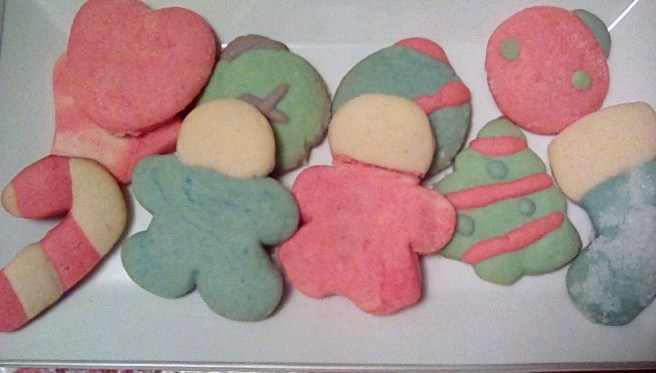
…cleaning up the Great Cookie Mess after the daughter…

Christmas Cookies, courtesy Elaya IceChristmas Cookies, courtesy of Elaya Ice

…getting the ham glaze made for tomorrow…

…figuring out where the heck I put that last present that I suddenly realized is still not wrapped…

…generally going quite mad (in a good way).

Not that I’m complaining. It’s been many years since I have had to track down various sizes of (unexpired) batteries, some of which I swear are only available to Jedi Knights. Or try to wiggle Part MT into the space between Part GR and Part NX (is this one really necessary? Dang it…)

Merry Christmas to all.

It’s the End of the Year…

Richard Skinner

…and this is my first post here since way back at the beginning of August. Sigh.

Anyone who has poked their nose into this space since that long-ago day probably believes that this is yet another abandoned blog space – and they would very nearly be correct. That was certainly not my intention, or plan, or any such thing.

In any case, here is a new post, albeit a very short one – I have another one that will top post this one coming in a bit here. But I felt that I should at least make my (revised) hopes clear for the upcoming year – a far more active year, if I can possibly manage it.

Since that last post, my poor wits, such as they are, have been seriously scattered, for various reasons (and several excuses). It has taken quite a while to track them back down, live-trap them, and return them to their proper places. A process that is almost complete, or so I fondly believe.

There will be more Tales By The Road by my alter ego, Sybly Whyte. The novel series is beginning to catch fire again. Blog posts are bobbing around in my head.

Please keep an eye on this space – I cannot absolutely promise a single solitary thing, but there should be much more to see here after the first of the year.

Learning Curve – Covering Up, Part One (and a Half)

Richard Skinner

Okay, this post is way late. As evidenced by the fact that I just changed the date for it in my document from “July ??” to “August 4.” Well, the same year, at least… I did have all of the notes done for it last month, but just could not work my way around to getting it done. (Actually, I have a whole bunch of notes, and the pictures, for an “appendix post” that I’ll be doing after this series is finished – “Covers, Through the Ages and Around the World.”)

In any case, this is the post where I rip my own covers (all two of them) up for your enjoyment and hopefully your edumacation. There are problems with just about all of the rules laid out by my “mentors” in their blog posts – please see Part One of this series for the links to them. The more “technical” issues involve the principles laid out by Cedar Sanderson in her Art of Design posts, though, so I’ve repeated the links to those two here, as you might want to have them open side-by-side with this one:

The Art of Design

The Art of Design, Part II

So, on to the covers, which you can see below. (Yes, those are clickable links to Amazon. No pressure here… At some time in the future, though, I’ll be writing about marketing, and how you never pass up a proper opportunity to do it.)

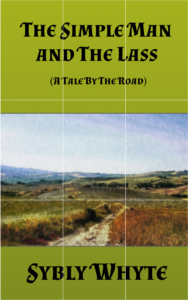
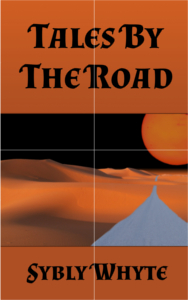
Tales By The Road The Simple Man and The Lass

The first rule of cover design: Signal! Signal, signal, signal! Whatever categories your work ends up in on Amazon, even if they are exactly right (for getting them right, go read Dorothy Grant, aka “fynbospress”) – if your cover does not signal the same category, the browsing customer will not click on it. I can virtually guarantee that.

So, what are the signaling issues here on the Tales covers? Well, they are rather vague. Wishy-washy. Actually, the Simple Man and the Lass cover is the worse of the two for accomplishing the objective. But even Tales By The Road really doesn’t cut it, although it has The Road, a lifeless sandy desert, and a huge red sun. Yes, it feels “science fictional,” but not exclusively so – it could be something like one of the hugely depressing psychological pieces, with a title like “Road To Nowhere.” Okay, maybe I’m just being hard on myself, but that is what I see here.

The Simple Man and the Lass is worse, as I’ve already noted. It really gives no clue that it has anything to do with either science fiction or fantasy – it could be a travel guide, a back-to-nature piece, almost anything. Okay, it does fit with the “pastoral” keyword I hung on it, but that’s about it (and that keyword did very little for Amazon search engine hits, believe me – it’s drowned out entirely by religious-themed items).

Now, assuming you get an even halfway decent basic “look” for a series of stories or novels, you probably won’t hit the problems that I’m having here. Which is that the Tales are going to be all over the map so far as “genre” goes. Yes, they are all science fiction / fantasy; the common thread of a sentient road telepathically telling its stories to a far-future human makes them that. But they are also going to be very different from each other beyond that starting point. The Simple Man and the Lass is a “pastoral light romance.” The next one, Fugitive, is firmly set in the “historic military combat” slot. After that comes a “social problems” piece, a “horror” story, a “Christmas story” piece, even a “murder mystery / police procedural” bit. No, I really don’t know how I got myself into this mess, but I blame the Muse…

Second rule: Stand out! Now, this is not such an easy thing to accomplish, at least in the current “cycle” of cover design. For a while, some years back, you could manage it with a cover of screaming yellow, or fire engine red. Right up until everyone began doing the same thing. Yes, the human eye is attracted more to bright colors, but that is not enough. Because the human eye is far more attracted to the visually different thing – a genetic legacy from the days when seeing the “different” was pretty much associated with whether we were the eaters – or the eaten.

The only advice I can give you – and remember that this is from a newbie – is to open up Amazon and start searching with the keywords you have selected for your work. Plus those that you think Amazon will pick from your blurb. What?! The keywords and the blurb have to be done before the cover? Yep. See here, and here, and here (Sarah’s second point on that last). How will you know whether a prospective cover design will stand out unless you are comparing it to the environment in which its going to be seen? A tip here: add a search by length too. For the Tales, I add “short” and “novelette” to the terms – those pretty much drop me into the “one hour or less” categories. Many people are looking for a quick read on their commute or during lunch break, while others are trying to find something for a weekend read.

For my own research, I copy the cover images I find into a temporary Word document for easy reference. (Mostly right now because the “short” category is largely populated with page after page of the “reading guides,” which don’t have real covers.) Then I start comparing them with my rough sketch. Another tip: when I have put together the really rough cover, I sweet-talk the family into coming in and doing the same comparison. It is all too easy to fall in love with “your” baby and not realize that the poor thing really looks just like everyone else’s kid. (Mothers reading this – yes, I know you have always been able to tell your child from a thousand others. Nobody else in the world can, including Dad, which is why babies get their ID bracelet before they’re allowed even ten feet away from you.)

Okay, how do my two covers stack up? Well, so-so. The “banded” design does, but that choice was a sub-optimal one (although mostly necessary). Yes, when and if the Tales acquire a fan base, they will be easy to find, which is a plus. But the new reader is barely going to notice the style. Otherwise, Tales By The Road has a decent color contrast, with the reddish elements against the black sky; that helps. The Simple Man and the Lass though, does not have this advantage – and there are a lot of other “greenish” and “country” covers in the Amazonian wilds.

Third rule: Give the right first impression! This is related to signaling the genre, and the category – but at a lower level. The level where the reader is making the decision about whether to click on your cover for more information. Amazon does its best to slot your work into the right places for the search engine, but they will never quite get it right. Between newbies like me using the wrong keyword (see above for how “pastoral” worked out for me), and writers that are deliberately gaming the system to get their works visibility in places where they honestly do not belong (see Sarah Hoyt’s rant), a typical search is going to turn up a lot of results that have absolutely no similarity to your offering. This is when your cover needs to say “Yes, this really is something you are looking for. Click with confidence!”

On this count – well, let’s say I’m not happy at all. Tales By The Road does look like its genre. But what is conveyed to the reader (in my honest opinion) is something that is not in the story – a feeling like it is an “end of the line” piece. Everyone is gone, the world is dead, don’t read if you are feeling at all depressed… Now, there is a bit of that element in the story, but that is certainly not the central theme. (Short critique mode here – the story is slow, it does lack any action – but it is, I hope, not depressive in tone.)

For The Simple Man and the Lass, well, the less said the better… About all that this cover tells someone is that the story is set in the countryside. Which is accurate, but not particularly helpful to someone paging through their search results.

Fourth rule: Branding! You might think that this rule applies only to series, which it definitely does – but it also applies to your brand. You, the writer. If you are reading this post to learn something about creating your own covers, you are obviously the publishing company too. (And the marketing department, and the bookkeeper, and the secretary, and the bottle-washer-in-chief…)

Your covers should at least be similar enough to identify them as all being part of your “product line.” Whether they are stand-alone or part of a series. I use “product line” quite deliberately here, too – you may have, almost certainly will have several of them. Maybe under different pen names, like “Sybly Whyte,” or under one name, but in several different genres. Each of your lines can have a different look, and it is probably a good idea to make sure that they do. (Beyond the obvious differences due to the other rules.)

My two covers, and the ones that are in the works yet, do at least manage to convey the Tales By The Road brand – and also the “Sybly Whyte” brand. If Sybly ever writes something that is not a Tale, I may run into some difficulties, however.

Next up are two of the “technical” rules If you still haven’t read Cedar’s posts on these, please do so now.

Technical rule one: Align the elements of your cover design. Elements that are not aligned – either with their edges along a common line (vertical and/or horizontal), or through their centers, give the viewer a “cognitive break”; i.e., their understanding of the whole composition does not flow smoothly.

This is only the first alignment principle, though, and the easiest to understand. There are two more:

The second alignment principle is the rule of thirds. To me, this should really be called the “rule of ninths,” but I have to go with the label of the experts, here. The basic notion here is that you do not place the most important element (the one that you want the viewer’s eye attracted to first) in the center of the picture – either vertically or horizontally. For various psychological reasons, the eye is attracted more to something that is not at the “main focus” – it will naturally drift to an object that is either to the left or the right, or (less so) above or below the dead center of an image. (Note, here, an image. It is better to align your text along the center line, or the left edge; very rarely, the right edge.) Cedar explains this more fully in her post (Part II) – but for an even more detailed explanation, and even more technical one, see Poster Composition and Layout. There are a lot of similarities between poster design and book cover design. (Hat tip to Dorothy Grant, here.)

Quickly here, let’s chop the two covers into rule of thirds grids:

Tales By The Road Cover - Rule of Thirds The Simple Man and The Lass Cover - Rule of Thirds

Do you see the problems here? Nothing in the pictures is really aligned along the “thirds” lines. In Tales By The Road, the road is way over on the right hand edge – and in the middle third of the cover, it is in competition with the Sun. It does not receive the emphasis that it should. Even worse is The Simple Man and the Lass, with the road in the horizontal center of the page. Meh.

One thing that is pretty close to right, though you have to read the poster composition article – the horizons on the images are where they should be. Yay! Also notice that the title is completely above the upper line in both cases, which is also a goodness thing. (The Simple Man and the Lass has a problem with the size and arrangement of the title and subtitle – but typography layout is for a later post.)

Now, the same covers, but divided into quarters – to make the “Gutenberg Diagram” for them. Sorry, this post is already incredibly late, so I didn’t add the arrows to it. Please see Cedar’s Part II post, but the basic idea is that people look at an image pretty much like they read (in the West, anyway) – from left to right on the top half, then from left to right on the bottom half. The top half quadrants are the “stronger” part of the image, meaning that they make or break that first impression, and “color” the impression of the bottom half. The right part of the bottom half is also more important – that’s where the “parting impression” is made, assuming the viewer does scan the entire cover.
Tales By The Road Cover - Gutenberg Diagram The Simple Man and The Lass Cover - Gutenberg Diagram

Again, the titles are in the right places – but the primary parts of the images really aren’t. Now, everything obviously cannot go into the “Primary Optical Area” and the “Strong Fallow Area” (using the diagram terminology – the upper left and upper right quadrants in non-psych-researcher speak). But both roads should be in the “Terminal Area,” or the bottom right quadrant. Not just the one on Tales By The Road.

Technical rule two: “Propositional denseness.” Okay, fancy, fancy words. Lotsa syllables… What does this mean? Simply put, it is the principle of packing as much information about what is inside the book into the outside of it – i.e., the cover. Essentially, Rules One and Three from above. Now, that does not mean just the image, but that is a big part of it. It also includes any snippets of reviews that you use. For printed books, it includes the blurb and review snippets on the back of a paperback, or (if you are wildly successful and start publishing hard covers) on the flyleaves.

The Simple Man and the Lass is again a “meh” in this respect. The only “proposition” it gives is that the story takes place out in the boondocks, not the big city, not a small town, not the highway junction with a greasy spoon, a bar, and a gas station… Tales By The Road does much better – a lonely road in a lifeless desert on a planet about to die. Although the information that this is actually a road on the Earth would be clearer if it had the human figures in it that I wanted and foolishly thought that I could accomplish with my meagre skill set. Which leads into another rule (yes, the last one, for this post anyway). One that I realized all on my lonesome, although I am quite positive that somebody has covered it on Mad Genius Club, I just can’t find the post or posts.

The “Dynamic” Rule: Take a look at the top 100 sellers in your category (yes, everybody tells you that). Well, taking a look at my category (15-Minute Science Fiction & Fantasy Short Reads – where, yay! At the moment I write this I’m #146!). All right, throw out the “Reading Order” lists (if it weren’t for those…). Also the ones that absolutely should not be showing up here – uh, the first four books of A Game of Thrones? Now, I’m a fast reader, but… (This is me, manfully resisting the urge to comment on whether they are worth even fifteen minutes…)

Anyway, complaints about Amazon shelving aside – what do you see in just about all of the covers, or in science fiction / fantasy covers in general?

They have a live figure – a human or humans (or a recognizable approximation thereof), an alien, a dragon.

– or –

They have a spaceship, or a recognizably fantastic castle.

– or –

They have explosions. (Well, science fiction frequently does. But urban fantasy can have them too.)

– or –

They have humans, dragons, and exploding spaceships. (Yes, there are some…)

Tales By The Road covers have none of these elements. They are landscapes, with a road. Static. Sigh…

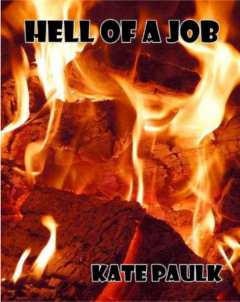
Okay, winding up. I cannot resist showing here one big exception to the humans / dragons / spaceships / explosions “rule.” While researching this post, I ran across Kate Paulk’s Hell of a Job short story. Which, if Amazon had its categories straight, would be in the top ten of my category. Take a look at her cover:

Hell of a Job Cover

None of those “common” elements – but this is fantastically dynamic. Fits the story perfectly.

By the way – there are some covers in my tiny little corner of the Amazon biosphere that are far worse than mine. Not trying to make an excuse here, but I could have really had something to cry over.

Phew! Between research and writing, this post took me about five full days. Yuck. This makes it very clear that I am going to have to cut back some on my ambitions. So… Well, wait. I have an “anniversary and housekeeping post” that has been turning over in the back of my head all of this time, so I’ll put the details there. In fact, that one will probably go up before this one does, just by the amount of work I still have to do to actually get this one up on the blog. In the meantime, the homework readings are below. I will be back.

Links to things you should read:

The Art of Design

The Art of Design, Part II

Yes, you should have already read these. It never hurts to go back, there is a lot of information packed into these two.

Comprehensive Cover Art and Design

Cedar Sanderson here again – but more of “out of the trees and surveying the forest.” She covers the whole “gestalt” of a cover design here, at least for anyone looking to create (or critique) a science fiction or fantasy cover.

Poster Composition and Layout

The article on poster design. Again, there are many, many similarities to cover design – and this article goes into a great deal of depth on the technical, fiddly bits of layout. Including layouts that are not simple grids, and combine basic layouts to create some of the most iconic posters and covers that have ever been seen. Recommended for now, and when you graduate beyond “elementary” school (no, I’m not anywhere near that myself!)

Typography & Cover Art – It’s How You Say It

Dorothy Grant (“fynbospress”) on getting the typography of your cover right. Very important information here.

Going Indie For Dummies – But what is it ABOUT?

The whole gamut of what needs to be in your sales copy – written in Sarah Hoyt’s own inimitable style. The cover of your book is only the beginning, but it is, like everything else you put out there (besides the book itself) a piece of sales copy. Sarah goes over most of the other pieces in this post.

What’s It About? – How to write the stuff on the back of the book

Okay, you may have a “final” product for your ebook on Amazon (or elsewhere). But what about when you want to put out a print book? (Which you will, eventually, even if the majority of your sales are electrons – it’s really, really difficult to go to a con, or a book signing, or hold up your “Will write for food” sign on the corner, without a hard copy to hand to interested people.) Dorothy Grant goes over the “flip” side of a print book in this post on her blog.

The key to it all: Keywords

The other key: Keywords, Part II

Dorothy Grant again, this time writing for the Mad Genius Club. All about categories, and keywords, and getting them right on Amazon. Do not fail to read this! Unless you really want your fantastic, steamy, New Agey type novel “shelved” in the Young Adults – Philosophy section…

Housekeeping and an Anniversary

Richard Skinner

Truly a “miscellany” post this evening. Several things about the blog, my anniversary” as a “writer,” and the (probably wildly optimistic) writing schedule.

Okay, the blog housekeeping first. Posts have been very late and very erratic over the last month. Not at all satisfactory to me – I’ve mentioned that I want to get one review post and one “technical” post out every week. Well, those are still on the schedule, but only the review posts have a definite subject assigned – whatever book I have reviewed for Amazon. Even there, I’ll have to catch up over the next week or so; I’ve reviewed one book by Dan Hoyt and one by Pam Uphoff for Amazon, but haven’t managed to finish up the more detailed reviews for the blog. (Pam’s I haven’t even started as of this writing. Sigh.)

The Learning Curve posts – well, I am editing the latest one on covers this evening, and it will go up either late tonight or in the wee hours of the morning, assuming my current internet provider problems get resolved soon-like. (If they aren’t, you won’t even be seeing this post…) After this one, though, I am not going to guarantee continuing the series on covers every week – they’ll appear as I get them done. While that is going on, there are going to be much shorter posts on various other subjects. Pretty much whatever has hit me upside the head during the week just past, or something on how I approach writing. Obviously, the latter is going to be useful for some, and useless to others – every writer has to develop their own methods for best results.

Let me see… Ah, yes. Once today’s Learning Curve post is up, I will get the Post Index page updated. Later on (I don’t know just when right now), I will be adding some of the “frills” that most blogs sport, like tag words.

Last planned thing on the blog (right now) is that I will be splitting up the Blog Roll into two pages as soon as I can get around to it. I realized the other day that the page, as originally conceived, is restricted to linking sites where advice about writing is dispensed. A good idea, one that works with the name I chose for this place – but leaves out people that should be of interest to a new writer. So, at some point in the near future, the Blog Roll is going away, to be replaced by Writers for Writing and Writers for Reading. Writers for Writing will have the links to the resource sites that are currently in the Blog Roll, along with some new ones as I update it. Writers for Reading, on the other hand, is going to point you to those writers that I think are great examples of writing and professionalism. Which means that most of the people on the other page will also be here, except with an additional link to their author page on Amazon – but also links to the blog (if they have one) and author page of writers that don’t particularly write about the writing process. Yes, that also includes some writers that are no longer with us.

Now, about that anniversary… Probably not a big deal to anyone else, but it was just over a year ago that I decided to try to become a professional writer. Note – try to become. I’m not there yet, quite a ways away in fact. But August 3, 2015 is the day that I started to get organized. Created a spreadsheet to log my word counts and time spent (which has since split and evolved immensely). Began a daily “writing diary” with my word processor – coincidentally called “Writing Observer.” Began organizing folders on the computer, and cleaning up the bits and pieces of documents that I had dabbled with before – as early as November of 2014. And so launched a new “career.”

It’s been a bumpy road, with an immense amount of learning along the way. Hampered by various life events and problems. Slowed immensely by procrastination. As you’ve noticed, it’s still not settled down to a routine – assuming it ever will. Anyway, I decided to share a few numbers, à la Dean Wesley Smith, as of the end (August 2nd) of this first year.

286,909 total words written;
767 average words written per hour (of writing time);
403 average words written per hour (adjusted for non-writing tasks);
537 average daily words (over the entire year);
9,043 total words written (last ten days);
904 average daily words (last ten days);
0,652 total words written (last thirty days);
1,355 average daily words (last thirty days).

Couple of notes to make here – “words written” includes actual manuscript drafts, synopses, character sheets, background appreciations, blog posts, and my daily log. Unlike Dean, I don’t include words written for correspondence. I do include the time on that though, which is part of the “non-writing task” adjustment. Including all of that explains why the word count doesn’t equate to at least three novels for sale right now.

The adjustment for “non-writing tasks” takes into account the time I spend reading the blogs I consider essential for keeping up, on copy-editing, preparing for publication, cover creation, the organization and reorganization of folders on the disk, etc. (You can see that nearly half of my time is actually consumed by things that don’t involve transferring words from the brain to the disk. Sigh. That has stayed steady for quite a while, but I am hoping to see it slowly decrease as time goes on.)

Now, so you aren’t tempted to whip out your calculator, when you divide total words by average words with other things taken into account – I have not quite worked even two hours a day on writing over the last year. Yeah, right – professional writer, my foot. Well, I mentioned procrastination and a few legitimate reasons that have kept that production down. Really, although you will have to take it on faith, since May of this year that figure has gotten much better, something more like five to six hours a day. Still not good enough! The goal right now is to ramp my work time back up to the sixty hours a week, or more, that I worked as a professional software developer. I will get there…

On that subject – getting there – I have some trepidation (well, outright fear to be honest) in sharing my publication schedule, which was actually set into stone just this last Sunday. With the caveat that I make no guarantees whatsoever, though, here it is:

Tales By The Road #2, Fugitive – August 15, 2016.

Tales By The Road #3, Rapid Transit – September 15, 2016.

Tales By The Road #4, Sacrifices – October 15, 2016.

Tales By The Road #5, Hunting Party – November 15, 2016.

Tales By The Road #6, Regular Visitors (A Christmas Tale) – December 1, 2016.

Talons of Vengeance (working title, first novel in a series) – December 15, 2016.

Tales By The Road #7, Clerical Affairs – January 15, 2017.

Tales By The Road #8, Soldiers – February 15, 2017.

Tales By The Road #9, A Passing Acquaintance – March 15, 2017.

Pavement Ends (short story, prequel to Talons of Vengeance) – March 15, 2017.

Counterattack (working title, sequel to Talons of Vengeance) – March 31, 2017.

Tales By The Road #10, Death In an Alley – April 15, 2017.

And that is as far as my courage, or hubris, has taken me for the moment. There are many more novels, in multiple series (including a sword and sorcery series), that I have on the “projected work” list – but they are far too nebulous right now. Some will undoubtedly be collapsed into one novel, or one will be split in two, as I think on them more (this has already happened, so I know there will be more of that in the days and months to come). Many shorter works will undoubtedly be coming to mind, too.

Please stay tuned to this channel…

A Filler Post, For Real – With a Recipe!

Richard Skinner

I really have no idea how I am accomplishing anything today – see my post from earlier in the week. Right now, it’s 94 degrees inside, which is ten degrees less than outside anyway. I really don’t believe my weather site that says there’s only 34% humidity, though.

So, I finally decided to get this post out for a promise that I made a couple of weeks ago or so, over on Sarah Hoyt’s blog. I had mentioned that my wife had an old family recipe for cookies that required 190 proof vodka as one of the ingredients.

Diversion here… I might as well admit that I have an extremely idiosyncratic memory. I can remember phone numbers just fine, the numbers of all the bank cards, every family Social Security number (but not what year they were born). I can remember the plots of books that I have read. I can remember the spelling of words that perhaps a half dozen people in the world ever actually use. I have vivid recollections of places that I have seen only once in my life.

What I don’t remember are the things that most people don’t have a problem with. People’s names (yes, I do remember the kid’s names, even if I don’t always attach them to the proper owner of same). When and how I came up with a writing idea (although I usually do remember the idea). Or, in this case, where a recipe came from.

It turns out that this recipe (which I have nicknamed the “rocket fuel recipe”) is not an old family recipe. I thought it was, because the wife refers to a hand-written copy when she makes it. Nope. It actually is out of a book, and is hand-written because: a) it is not in the form that we in the West usually see recipes, and b) she had lent the book to her sister several years ago.

Well, I got the book back from the sister-in-law this last weekend. And it turns out that it is not a cookie recipe, either! It is actually one for the form of pastry that most people call a cruller. (Okay, I call just about anything that is sweet and crispy a cookie. I cook, I don’t chef…)

So, here is the recipe, which I am cribbing from my wife’s index card, not the book. Although – if you are interested in Polish cooking at all, I can heartily recommend the book (the sister-in-law is not getting it back for a while, I want to try several things in it). It’s called Polish Heritage Cookery. I’ve linked to the hardcover for it, although the Kindle version is about ten bucks cheaper – when you take a look at it, you will notice that the publishers don’t quite have this ebook thing down yet (the Look Inside is scans from the print book, which makes me somewhat doubtful of the Kindle version). The recipe also doesn’t include the pictures from the book on how to make the shape, and I can’t find any web diagrams. Sigh. Another good reason to get the book – it has plenteous and good illustrations.

Angel Wings (Faworki / Chrust / Chruściki)

2 cups white flour
5 egg yolks
1 tablespoon butter, softened
2 tablespoons sour cream
1 tablespoon 190 proof vodka (6% distilled vinegar may be substituted)
Pinch of salt
1 and 1/2 pounds lard (shortening or vegetable oil may be used, but with loss of flavor)
Confectionary or granulated vanilla sugar

Sift flour onto a cutting board, making a well in the center. Place the egg yolks, butter, sour cream, vodka, and salt into this well, then work it into a dough by hand, occasionally beating it down. When done, the dough should be uniform, glossy, and with small holes when cut into. Force as much air into it as possible! On a floured board, roll the dough out as thinly as you can, then cut and form your angel wings. Heat lard in a large pan to a temperature where a small piece of dough dropped into it floats to the top immediately. Fry the angel wings in small batches that can float freely, turning after approximately 30 seconds when the bottom is golden brown, and allow another 30 seconds for the top to turn. Remove to a rack over paper towels to cool down. When cool, dust thoroughly with the sugar.

A Writer Status Post

Richard Skinner

A friend once told me, “If all else fails, you can always blame it on the weather.” I don’t recall at this late date just what failure he was advising me to use that excuse for, but I’ve always hated the notion.

Well, I’m having some failures these days. And the weather is pretty much the sole reason for them. Sigh… I guess I have to pull that card out.

You see, I live in the desert regions of Arizona. Which actually has pretty darn nice weather for a biggish chunk of the year. (No, I’m not trying to start any “my climate is best” debate here. Just about every place has pretty darn nice weather, just the extent and timing of it differ.)

Except for right now – actually, beginning about with July and through most of August. Right now, it is absolutely miserable, especially for my family and myself. You see, we do not have air conditioning in our house, and this is the time of year when the temperature and the humidity are both sky-high. Sans air conditioning, it is miserably hot during the day; and this does not change all that much once the sun goes down. Right this moment, as I write this sentence at 10 PM, the outside temperature here is 93 degrees and the inside temperature is 94 degrees. Evaporative cooling does nothing to alleviate the heat when we are this humid.

Long explanation / excuse for a short problem. I’m just plain not working at any kind of fast pace – and when I do work (night and early morning), quality takes a nose-dive. Just the way it is right now, and I can only hope to correct this annual problem next year, maybe. In the meantime, looking back at my logs, I am still producing a heck of a lot more, writing-wise, this summer than I did a year ago.

The long range view is that I’m very unlikely to meet any of my self-imposed schedules until September is here. At short range, I’m definitely not going to accomplish everything that I want to do.

So, what I think will happen, after looking at things through the cleaned off reality lens:

1) I’ll continue to get my reviews of other people’s books up on Amazon on a weekly basis. This is something that I have committed myself to, and is very important for supporting those people who have inspired me, and continue to give me encouragement. However, the blog posts that go with them are going to appear at some time, maybe a long time, after the Amazon review is done – I started the one for Dan Hoyt’s 9th Euclid’s Prince on Saturday last, and it might as well be gibberish. I know what I want to say, but the brain’s language center, it is not cooperating.

2) The Learning Curve series will continue, although not on a guaranteed Wednesday schedule. I have started the post for this Wednesday, which is probably going to actually go up on Friday at best. But I have named it “Part One (and a Half)” – I was taking notes for it while going through the readings in Part One, and found myself diverted into expanding on the prompts those posts gave me. The nitty-gritty of actually creating covers will continue at some time, I just don’t know when. These are posts that I need to make sure that I don’t make some stupid mistake(s) on, leading the reader astray.

3) The August Tales By The Road short, Fugitive, will get done in August, and probably mid-month like The Simple Man and The Lass. A fair amount is drafted, and the rest of the plot is synopsized; I should be able to finish it with an hour here and an hour there of lucidity. The base cover image is already selected, too, so that is also something that won’t need a long stretch of mental acuity to finish up. (If it were my first cover attempt, though, I’d be in serious trouble.)

4) There are some “bloggish things” on my list to take care of. Those will also get done sometime soon, although they are a lower priority.

5) In any good hours that are left, I am still working on the first novel (working title, Talons of Vengeance). Absolutely no schedule that I can make on that project – I went back to it after the six weeks of getting the Tales out there and starting up this blog, and was shocked at what I thought was done – and turned out to not be.

Of course, anyone living down here in the “monsoon belt” knows that the weather could break at any time; I could start getting the nice massive evening thunderstorms again that cool things off for the night hours. In which case my productivity will rebound. But I’m not betting on it…